

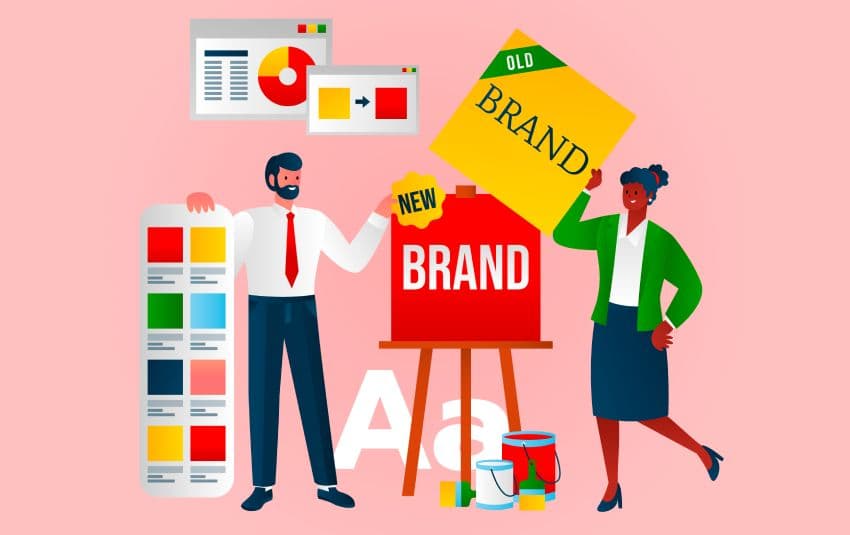
Everything needs an update at some point; the whole idea of updates is to adapt to changes over time, rather than being stuck in the past. When brand guidelines are not updated at the right time, users lose interest as they feel disconnected with an outdated look and feel of the brand. At the same time, understanding when updates are needed is crucial, as frequent or poorly timed updates can negatively impact business growth.
At Blueprint360, we believe timing is everything. We make sure your brand guidelines evolve right alongside your business, ensuring success and growth. Keeping your brand guidelines up to date can make a significant impact. Here's why a refresh is worth considering.
When a company diversifies or expands its value proposition, the original brand guidelines become inadequate, as they were not created to reflect the entire magnitude of what the business is now. A brand initially developed for one service might not be capable of articulating a diversified offering.
Revising the guidelines for this purpose may involve new visual systems, revised messaging, or even a change in brand structure. Coupling guidelines with product and service change guarantees that the brand is a reflection of the business today, not the past.
Example: For RightComply.ai, a worker compliance platform, Blueprint360 created a solid content approach and web experience that aligned with their changing product vision, providing clarity for all stakeholders in the hiring pipeline.
Growth often involves expanding into new geographies, consumer segments, or demographics. What appeals to one audience may not appeal to another. Refreshing your brand guidelines ensures your visuals, messaging, and overall identity seem current and respectful to new markets without sacrificing consistency with your core brand identity.
Example: Blueprint360 developed a social media campaign and site experience for Saheli, a women's health brand, that catered to women of reproductive age. The brand message resonated strongly with their target audience through the proper tone of voice and visual identity.
Design trends change rapidly, and something that seemed new five years ago may appear old-fashioned now. A dated brand identity is not merely an aesthetic issue; it can contribute to the illusion that the business is stuck without innovation or falling behind.
New brand guidelines should now state how to customize the brand for contemporary marketing channels and devices, such as social media platforms and mobile devices. So, you must elaborate on responsive usage of logos, digital-first designs, motion graphics, and accessibility guidelines to make the brand accessible and usable on various devices and platforms. A new, future-proof identity guarantees that the brand embodies innovation and relevance to consumers.
Example: For Mitra Ottomed, we moved away from an outdated brand identity with a complete rebranding exercise, refreshing their logo, website, and marketing collaterals including brochures and catalogues. This gave the brand a modern, cohesive look that better resonates with today's audience.
The culture of an organization tends to change during leadership shifts, revision of mission, values, and organizational strategy, or during mergers and acquisitions. Your brand identity needs to reflect who you are now, not who you once were. Updating your guidelines assists in keeping organizational culture and brand identity aligned.
Example: For Astrotime, we supported their cultural shift by refreshing the website and crafting a new tagline that reflected their evolved vision.
The larger a company gets, the more difficult it is to maintain consistency in branding among teams, platforms, and campaigns. When logos are being misused, messaging is disjointed, or visuals aren't on point, it's time to revise your guidelines. Elaborate and consistent brand guidelines make it easier for everyone to stay aligned and on brand.
Example: For OneGlobe Systems, Blueprint360 created new brand guidelines and redesigned the website, kept updating content and knowledge resources following the same brand look and feel, and reflected the branding changes in the company's social media feed as well. Such a unified, revamped digital presence cut through inconsistencies to ensure that the brand spoke with clarity and coherence through channels.
Pressure from the competition and the market forces strongly indicate that the brand guidelines are due for a complete refresh. If competitors are updating their brand or embracing new digital standards while your brand remains static, then your company will look less innovative.
Refreshing guidelines not only ensures that you adapt to current market trends but also offers an opportunity to make your brand stand out from the competition. Continuous brand audits enable you to identify positioning gaps and make guidelines ready for new platforms, technology, and consumer aspirations.
Example: For Study Smart CBSE, Blueprint360 revised the look and feel of the brand and rewrote the brand guidelines to align the brand with a strong digital presence through website and app design, search engine optimisation, social media marketing, and Google Advertising.
Brand guidelines are not meant to be static documents; they are living systems that must evolve alongside a business. Updating them at the right time ensures that a brand remains authentic, competitive, and aligned with organisational growth.
By treating guidelines as a dynamic framework—one that adapts to services, markets, culture, and competition—businesses can protect their brand equity while positioning themselves for long-term success.
Brand guidelines can range from a short style sheet of 5-10 pages to a detailed manual of 50+ pages, depending on brand complexity. The key is to include only what is essential for consistency.
Brand awareness is measured through surveys, recall tests, website traffic, search volume, and social media reach, often benchmarked against competitors.
Branding should be reviewed every 3-5 years or when there are major shifts in services, markets, or customer expectations.
A brand guide is created by defining brand purpose, values, voice, and visual identity, then documenting rules for consistent application across platforms.